
Published · Updated
Solar systems for hospitals can help healthcare facilities manage high electricity consumption while supporting their long-term energy requirements.Hospitals and clinics require electricity around the clock. Unlike many commercial buildings, healthcare facilities cannot simply stop operations when electricity becomes unavailable. Medical equipment, operating rooms, diagnostic systems, refrigeration, ventilation, lighting, computers, communication systems, and patient-care facilities all depend on a reliable power supply.
At the same time, healthcare facilities can have significant electricity consumption. Air conditioning, ventilation, medical equipment, lighting, water pumps, laboratories, imaging systems, and other electrical loads can contribute to high monthly energy costs.
Why Do Hospitals and Clinics Need Reliable Energy?
Electricity is essential for almost every part of a healthcare facility.
Hospitals and clinics may use electricity for:
- Operating rooms
- Patient rooms
- Emergency departments
- Medical imaging equipment
- Laboratory equipment
- Ventilators and other medical devices
- Refrigeration
- Air conditioning
- Ventilation systems
- Lighting
- Computers and IT systems
- Security systems
- Elevators
- Water pumps
- Sterilization equipment
- Communication systems
Many of these systems need continuous or highly reliable electricity.This is why properly designed solar systems for hospitals should be planned around the facility’s critical electrical and operational requirements.
A power interruption can create operational challenges and may affect patient care, which is why healthcare facilities generally require carefully planned backup power systems in addition to their normal grid supply.
Solar can become one part of a broader energy strategy designed to improve efficiency and reduce electricity costs.For hospitals and clinics, solar systems for hospitals can provide an additional source of electricity while reducing dependence on grid power.
What Are Solar Systems for Hospitals and Clinics?
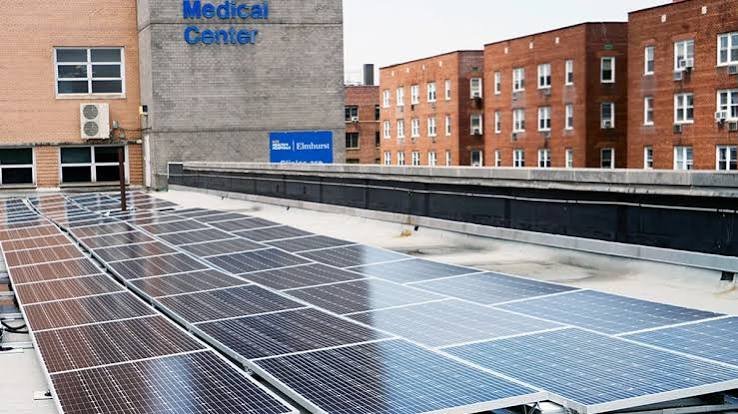
A solar system for a hospital or clinic is a renewable energy system designed according to the facility’s electricity consumption, operating schedule, critical loads, available installation space, and backup requirements.
A healthcare solar system may include:
- Solar panels
- Solar inverters
- Mounting structures
- Electrical protection equipment
- Monitoring systems
- Battery storage
- Grid connection
- Backup integration
- Energy management equipment
The exact configuration depends on the facility.Solar systems for hospitals can be customized for small clinics as well as large healthcare facilities with complex electrical loads.
A small clinic may require a relatively simple solar system, while a large hospital may need a high-capacity commercial or industrial solar installation with multiple inverters and an advanced backup strategy.
How Does Solar Work for a Hospital?
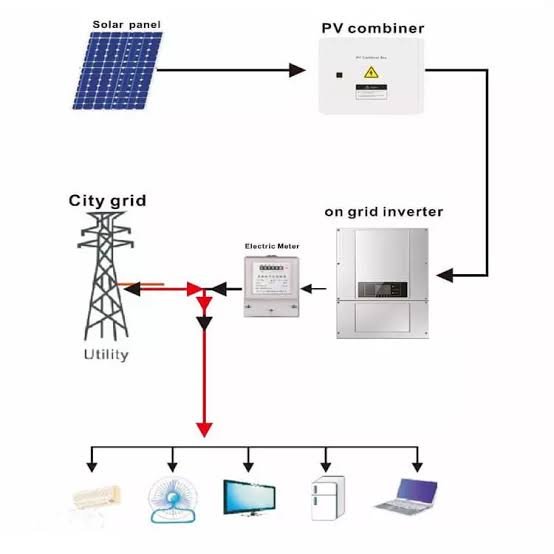
Solar panels convert sunlight into electricity. The inverter converts the electricity into usable AC power for the healthcare facility.
During daylight hours, solar-generated electricity can be used by the hospital or clinic for its electrical loads.
The basic process is:
Sunlight → Solar Panels → Inverter → Healthcare Facility → Electrical Loads
Solar energy may support lighting, cooling, computers, pumps, administrative systems, and other suitable loads.With properly designed solar systems for hospitals, solar-generated electricity can support suitable daytime loads across different areas of a healthcare facility.
When solar generation is not sufficient to meet the facility’s demand, additional electricity can be supplied according to the system configuration.
For facilities requiring backup, battery storage can be incorporated into an appropriately designed hybrid system.
Benefits of Solar Systems for Hospitals & Clinics
1. Potential Reduction in Electricity Costs
Hospitals and clinics can have high electricity consumption due to their continuous operations and extensive use of electrical equipment.
Generating electricity from solar can reduce the amount of electricity purchased from the grid.
Potential savings depend on:
- System size
- Electricity consumption
- Solar generation
- Electricity tariffs
- Operating schedule
- System performance
- Installation cost
- Maintenance
- Battery requirements
A professional energy assessment can provide a more realistic estimate based on the facility’s actual electricity data.This makes solar systems for hospitals a potential long-term approach to managing healthcare energy expenses.
2. Supports Daytime Energy Consumption
Many healthcare facilities operate significant loads during daylight hours.
Solar generation during the day can be used to support:
- Air conditioning
- Lighting
- Medical offices
- Laboratories
- Computers
- Water pumps
- Refrigeration
- Administrative systems
Using solar electricity directly during production hours can help reduce grid electricity consumption.For healthcare facilities with significant daytime consumption, solar systems for hospitals can make effective use of electricity generated during daylight hours.
3. Reduces Dependence on Grid Electricity
Solar allows healthcare facilities to generate a portion of their electricity on-site.
This can reduce dependence on grid electricity and provide another source of power for normal operations.
Solar does not necessarily replace the grid. Instead, it can work alongside the grid as part of a diversified energy strategy.Solar systems for hospitals can therefore help reduce grid dependence while allowing the healthcare facility to continue using the grid when additional electricity is required.
4. Can Be Combined With Battery Backup
For hospitals and clinics, backup power can be especially important.
A hybrid solar system can combine:
Solar + Battery Storage + Grid + Backup Infrastructure
Depending on the design, stored energy can be used to support selected loads when solar generation is unavailable or during grid interruptions.
Battery capacity should be determined based on the healthcare facility’s critical-load requirements and required backup duration.For facilities that require backup power, solar systems for hospitals can be combined with appropriately sized battery storage and backup infrastructure.
5. Helps Manage High Cooling Loads
Air conditioning can be one of the largest electricity loads in healthcare facilities, particularly during hot weather.
Hospitals may operate cooling and ventilation systems for extended periods to maintain appropriate indoor conditions.
Solar can help offset some of the electricity required for these systems during daylight hours.This makes solar systems for hospitals particularly relevant for healthcare facilities with significant air conditioning and ventilation requirements.
6. Supports Sustainable Healthcare
Healthcare institutions can contribute to environmental sustainability by using renewable energy.
Solar electricity can become part of a hospital’s broader sustainability strategy, alongside:
- Energy-efficient lighting
- Efficient HVAC systems
- Water conservation
- Energy monitoring
- Waste management
- Efficient medical equipment
- Building efficiency improvements
A solar installation can demonstrate a healthcare organization’s commitment to responsible energy use.
Solar for Different Types of Healthcare Facilities
Solar for Hospitals
Hospitals typically have large and complex electricity requirements.
Solar can be designed to support suitable hospital loads across:
- Patient areas
- Administrative buildings
- Laboratories
- Offices
- Waiting areas
- Lighting systems
- HVAC systems
- Water pumps
- Other non-critical or appropriately backed-up loads
Because hospitals have critical medical loads, system design must be carefully coordinated with existing electrical and backup infrastructure.A professional solar systems for hospitals design should therefore consider both normal electricity consumption and the facility’s critical-load requirements.
Solar for Clinics
Small and medium-sized clinics may have simpler electricity requirements.
Solar can support:
- Lighting
- Fans
- Air conditioning
- Computers
- Medical equipment
- Refrigeration
- Security systems
- Communication equipment
A clinic can select a system based on its daily consumption and backup requirements.
Solar for Diagnostic Centers
Diagnostic centers may use electricity for imaging equipment, computers, refrigeration, lighting, cooling, and laboratory systems.
Solar can help offset normal electricity consumption, while backup systems can be designed for appropriate critical loads.
Solar for Laboratories
Laboratories may require reliable electricity for equipment, refrigeration, ventilation, lighting, and computing systems.
A solar and battery strategy can be considered based on the laboratory’s operational requirements.
On-Grid Solar for Hospitals
An on-grid solar system operates alongside the electricity grid.
During the day, solar energy can be used by the healthcare facility.
When solar production is insufficient, the grid can supply the remaining electricity according to the system configuration.
On-grid solar may be suitable for facilities primarily focused on reducing electricity expenses.
However, hospitals should carefully consider backup requirements because standard grid-connected solar systems are not automatically designed to operate during grid outages.For hospitals primarily focused on reducing electricity expenses, on-grid solar systems for hospitals may be considered when backup requirements are handled separately.
Hybrid Solar Systems for Hospitals
A hybrid solar system combines solar generation with battery storage and grid connectivity.
Solar energy can be used during the day while batteries can be charged when appropriate.
Stored energy can then support selected loads when solar generation is lower or during grid interruptions, depending on the system architecture.
For healthcare facilities, hybrid systems can be considered when the facility needs:
- Energy storage
- Backup power
- Greater energy flexibility
- Support for critical electrical loads
- Reduced dependence on traditional backup sources
The backup system should be professionally engineered around the facility’s electrical and medical requirements.Hybrid solar systems for hospitals can provide a flexible approach when a healthcare facility requires solar generation, battery storage, and additional backup capability.
Solar and Backup Power for Critical Loads
Hospitals often have different categories of electrical loads.
For example:
Critical Loads:
Equipment and systems that require highly reliable power.
Essential Loads:
Systems that should remain operational during an outage.
Non-Critical Loads:
Equipment that can potentially be switched off temporarily.
A solar-plus-battery system can be designed to support selected critical or essential loads, depending on its capacity and architecture.
This approach can help prevent the battery system from being unnecessarily oversized.
Can Solar Systems for Hospitals Replace a Generator?
Solar should not automatically be considered a complete replacement for conventional emergency backup systems in a healthcare environment.
Hospitals have critical electrical requirements and must comply with applicable safety and operational standards.
Solar and batteries can instead be integrated into a broader backup strategy.
For example:
Solar + Battery + Grid + Generator
may provide multiple sources of energy, depending on the facility’s requirements and applicable regulations.
The correct approach should be determined by qualified electrical professionals and the healthcare facility’s operational needs.
How Much Solar Does a Hospital Need?
There is no universal solar system size for hospitals.
The required capacity depends on:
- Monthly electricity consumption
- Peak demand
- Daytime load
- Number of buildings
- Air conditioning requirements
- Medical equipment
- Laboratory loads
- Available roof space
- Available land
- Backup requirements
- Future expansion
A detailed energy audit and site assessment should be completed before system sizing.
Solar Installation Process for Hospitals
A professional solar systems for hospitals project usually follows several stages.
Step 1: Energy Assessment
The facility’s electricity bills and energy consumption patterns are reviewed.
Step 2: Site Survey
Roof areas, ground space, electrical infrastructure, and potential installation locations are evaluated.
Step 3: Critical Load Assessment
The facility identifies the electrical loads that require backup or priority power.
Step 4: System Design
The solar, inverter, battery, and backup architecture are designed according to the facility’s requirements.
Step 5: Proposal and Financial Analysis
The hospital receives project details, estimated generation, expected savings, equipment specifications, and costs.
Step 6: Installation
Solar panels, inverters, mounting structures, batteries, electrical protection, and other equipment are installed.
Step 7: Testing and Commissioning
The system is tested to ensure proper operation and safe integration.
Step 8: Monitoring and After-Sales Support
The system is monitored and maintained according to the facility’s requirements.
Frequently Asked Questions (FAQ)
1. Why should hospitals install solar systems?
Solar systems for hospitals can help healthcare facilities generate renewable electricity, potentially reduce grid electricity costs, and improve energy management. Solar can also be combined with battery storage and other backup systems where appropriate.
2. Can solar systems for hospitals reduce hospital electricity bills?
Yes. Solar can reduce the amount of electricity a hospital purchases from the grid. The actual savings depend on system size, energy consumption, solar generation, electricity tariffs, and system performance.
3. Can solar power medical equipment?
A properly designed solar system can support suitable medical and facility loads. Critical medical equipment requires careful electrical and backup planning to ensure reliable operation.
4. Do hospitals need batteries with solar?
Not necessarily. Batteries may be recommended when the facility requires energy storage or backup power. The appropriate battery capacity depends on the critical loads and required backup duration.
5. Can solar provide backup power during load shedding?
A solar system with suitable battery storage and backup functionality can support selected loads during grid outages. Solar panels alone do not automatically provide backup power.
6. Can solar systems for hospitals replace generator?
Solar and batteries can complement conventional backup systems, but hospitals should not assume that solar alone can replace emergency backup infrastructure. Backup requirements should be evaluated by qualified professionals.
7. How much solar does a hospital need?
The required capacity depends on electricity consumption, peak demand, operating hours, medical equipment, HVAC requirements, available space, and backup needs.
📍 Office: MM Tower, Plaza 54, KB Commercial Road, Lahore
📞 Phone: +92 319 9903998
📧 Email: Info@ecogreensolars.com
🌐 Website: www.ecogreensolars.com
#SolarForHospitals #SolarForClinics #HealthcareSolar #HospitalSolar #SolarEnergy #SolarPower #SolarPakistan #SolarLahore #SolarPanels #HybridSolar #RenewableEnergy #CleanEnergy #EnergySavings #PowerBackup #HealthcareSolutions #SustainableHealthcare #SolarInstallation #EcoGreen Solar
Need help with your solar or electrical work?
EcoGreen Solar installs solar systems and provides electricians, wiring and CCTV across Lahore and Punjab. Get a free survey and a written quote.
Call / WhatsApp 0319 9903998 Request a free quote
Related: Commercial & industrial wiring · Solar installation services · Cities we serve