
From Net Metering to Net Billing: How Pakistan’s 2026 Policy Affects Solar Savings
Net billing Pakistan is no longer a distant policy debate. As of February 9, 2026, it is the default legal framework governing every new rooftop solar connection in the country. For thousands of households and businesses that built their solar investment strategy around net metering, this transition introduces new calculations, new challenges, and a clear need for smarter planning.

This blog breaks down exactly what changed, what it means for your electricity bills, and how to protect the value of your solar system under the new rules.
What Net Metering Was and Why It Worked
For over a decade, Pakistan’s solar sector grew on the strength of the Net Metering Regulations 2015. The system was straightforward: every unit of electricity you exported to the grid offset one unit you consumed from it. If your solar panels produced more than your household used during the day, that surplus balanced against your nighttime or cloudy-day consumption on a one-to-one basis.
Under this framework, consumers could sell excess electricity to the grid at approximately Rs. 25.9 per unit, the same rate they paid for grid supply. For many homes with properly sized systems, monthly electricity bills dropped to near zero. The payback period on a solar investment typically fell between three and five years, making solar one of the most compelling financial decisions available to Pakistani households.
By early 2026, Pakistan’s rooftop solar capacity had grown to an estimated 6,000 megawatts, with over 466,000 active prosumers connected to the national grid.
The 2026 Shift: What Net Billing Pakistan Actually Means
The NEPRA (Prosumer) Regulations 2026, notified on February 9, 2026 via SRO 251(I)/2026, ended the one-to-one exchange model and replaced it with net billing Pakistan. The mechanics are different in one critical way.
Under net billing, the currency of exchange changes from units to money. You buy electricity from your DISCO at the full applicable consumer tariff. When you export surplus solar electricity to the grid, you are paid at the National Average Energy Purchase Price (NAEPP), currently set at approximately Rs. 11 per unit. That is a reduction of roughly 60 to 70 percent compared to the previous buyback rate.
Concretely, this means:
- You purchase from the grid: approximately Rs. 50 to Rs. 60 per unit (applicable tariff)
- You sell to the grid: approximately Rs. 11 per unit (NAEPP)
The gap between what you pay and what you earn for surplus energy is the defining challenge of the net billing era.
NEPRA has also shortened the standard agreement term to five years, down from seven years under the old regime, and introduced a non-refundable concurrence fee of Rs. 1,000 per kilowatt for all new solar connections regardless of system size.
Who Is Affected and Who Is Protected
The transition does not apply uniformly to all solar users.
Existing net metering consumers: Following direct intervention at the federal level, NEPRA amended the regulations to confirm that consumers with valid net metering agreements signed before February 9, 2026, will retain their original billing terms until their contracts expire. This protection is legally confirmed through a retrospective amendment effective from the same date.
Pending applications: A total of 5,165 applications submitted before February 8, 2026, covering approximately 250 megawatts of combined capacity, have been confirmed for processing under the previous net metering framework.
New applicants: Any consumer applying for solar grid connectivity from February 9, 2026 onward is fully governed by the new net billing Pakistan rules, including the lower buyback tariff, five-year contract period, and mandatory NEPRA concurrence fee.
Important caveat for existing users: If you hold a valid net metering contract but choose to expand or upgrade your system, the additional capacity may fall under the new regulations. This means modifying your existing installation could result in losing the protected net metering rate on the modified portion of the system.
How Net Billing Changes the Financial Case for Solar
The impact varies across user categories, but the fundamental shift is universal: export-heavy strategies no longer maximize savings.
Residential users face moderate impact. A household that consumes most of its solar production during the day, running appliances during peak sunlight hours, can still significantly reduce its electricity bill. The change hurts most when a system is oversized relative to actual daytime consumption.
Commercial users face higher exposure. Offices and retail establishments that generate more than they consume during business hours will see reduced value from their exports.
Industrial users are most affected. Large installations designed around high export volumes will experience the sharpest reduction in return on investment. Systems that previously achieved near-zero billing may now face meaningful residual bills.
Under net metering, the strategic logic was simple: generate more, export more, earn more. Under net billing Pakistan, that logic is reversed. The new principle is: consume more of what you generate, export as little as possible, and design your system around your actual load profile.
The Critical Role of Hybrid Solar Systems in 2026
One of the most practical responses to the net billing Pakistan shift is the adoption of hybrid solar systems combined with battery storage. When your solar panels produce more than you need during the day and you cannot export it profitably, storing that surplus for use at night is the most economically sound alternative.
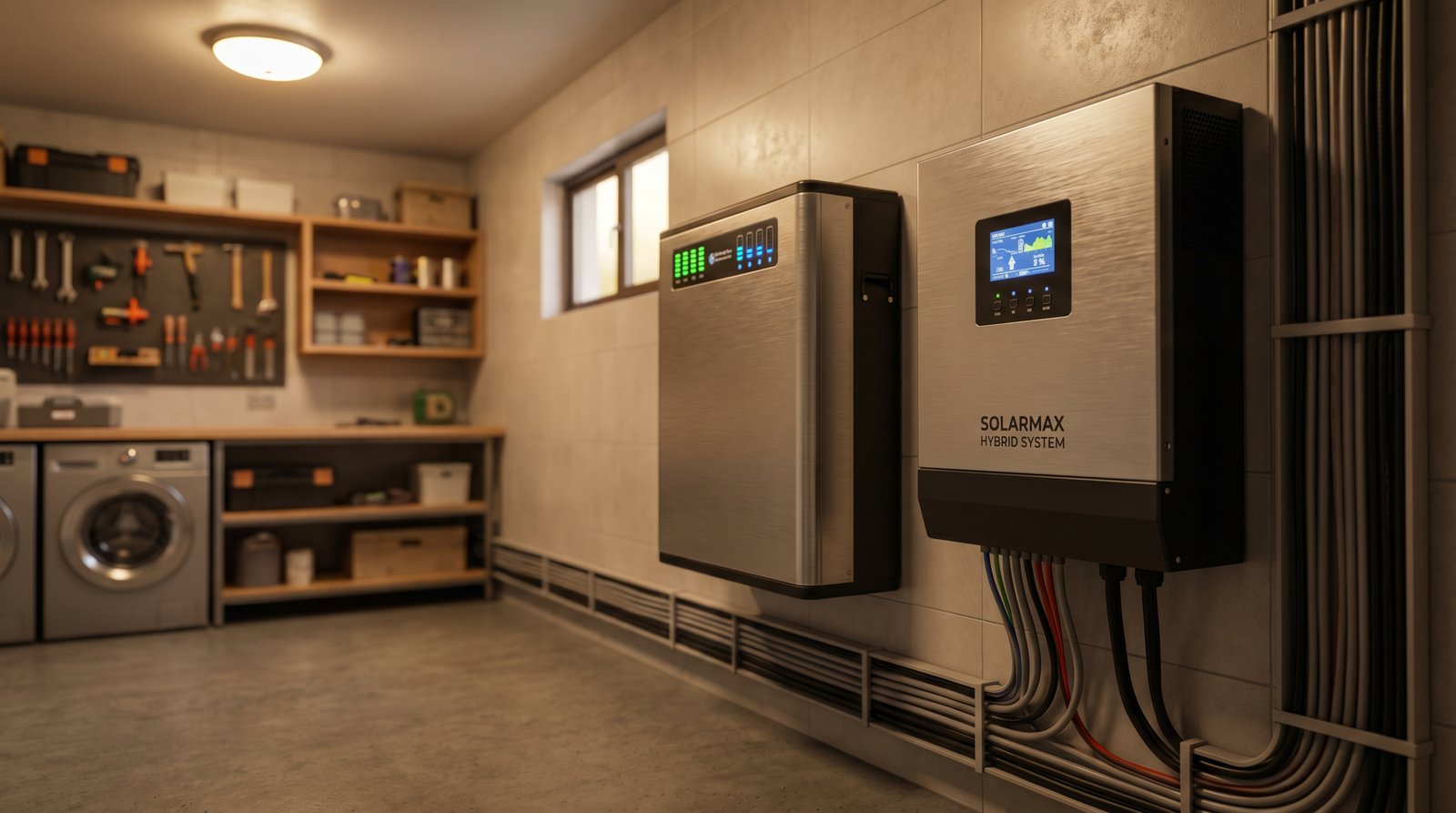
EcoGreen Solar’s hybrid solar systems are specifically engineered for exactly this scenario. A hybrid setup pairs your solar panels with a smart inverter and battery bank, allowing you to store excess generation, draw from stored energy during evening hours, and reduce both your grid imports and your low-value exports simultaneously.
For consumers transitioning to net billing or installing solar for the first time in 2026, a hybrid system often delivers better long-term value than a grid-tied system optimized for export. The battery essentially allows you to sell your surplus energy to yourself at the full applicable tariff rate, rather than to the DISCO at Rs. 11 per unit.
EcoGreen Solar offers a complete range of hybrid solutions, from residential-scale setups to commercial installations, designed and installed by certified engineers who account for your specific consumption profile, load schedule, and budget. You can explore available configurations on the EcoGreen Solar products page.
7 Strategies to Maximize Savings Under Net Billing Pakistan
The following strategies are not theoretical. They reflect the practical realities of the new regulatory environment and the guidance EcoGreen Solar provides to every client during system design.
1. Right-size your system to your actual load Oversizing increases export and reduces ROI under net billing. Calculate your average daily and monthly consumption and design your system to match it, not to exceed it significantly.
2. Shift high-consumption appliances to daytime hours Air conditioners, washing machines, water heaters, and ovens should run during peak solar production hours. This directly increases self-consumption and reduces both imports and low-value exports.
3. Install battery storage A battery bank turns excess daytime generation into usable nighttime energy. Under net billing, this is one of the highest-return investments a solar user can make.
4. Choose a hybrid inverter with smart energy management Modern hybrid inverters prioritize self-consumption automatically, switching between solar, battery, and grid based on availability and cost. This eliminates the need for manual load management.
5. Monitor your system and adapt consumption patterns Real-time monitoring tools provided with quality solar systems allow you to track generation, consumption, and export in detail. Use this data to refine your energy habits continuously.
6. Avoid system expansion without professional assessment Expanding an existing net metering installation without expert guidance can inadvertently place your entire system under the new net billing rules. Consult a qualified solar company before making any changes.
7. Plan for the five-year contract horizon Unlike the previous seven-year agreements, net billing contracts run for five years. Structure your financial expectations and system design around this revised timeline.
Why Solar Remains Worth It in 2026
The shift to net billing Pakistan reduces the financial return on solar investment. It does not eliminate it.
Electricity tariffs in Pakistan continue to rise. Grid supply remains unreliable in many areas. The capital cost of solar panels and inverters has declined substantially over the past five years. For any consumer who can increase daytime self-consumption and pair their system with battery storage, the economics of solar in 2026 remain compelling.
The payback period for a well-designed system rises from the previous three to five years under net metering to an estimated five to seven years under net billing. That is still a strong return relative to most available investments in Pakistan’s current economic environment, and it comes with the added benefits of energy independence and protection against future tariff increases.
According to reporting from the Express Tribune and ProPakistani, Pakistan’s solar industry is adapting rather than contracting. The emphasis is shifting toward efficiency, strategic design, and battery integration, precisely the direction EcoGreen Solar has been recommending to clients throughout this transition period. For an authoritative policy reference, the full NEPRA Prosumer Regulations 2026 are publicly available on NEPRA’s official website.
What This Means If You Are Considering Solar Right Now
If you are evaluating a solar installation in 2026 under the new net billing Pakistan framework, the most important step is a proper load assessment before any system is sized or quoted.
EcoGreen Solar provides detailed consumption analysis as part of every consultation. The team evaluates your monthly usage patterns, peak demand hours, appliance schedules, and future energy needs to recommend a system size and configuration that maximizes savings within the net billing structure.
The company has completed residential, commercial, and industrial solar projects across Pakistan and brings direct experience with net billing-era system design to every new client engagement. Past projects are documented on the EcoGreen Solar projects page.
Whether you are starting fresh or evaluating the impact of this policy change on an existing installation, professional guidance is essential to making the right decision in the current regulatory environment.
Conclusion
The transition from net metering to net billing Pakistan is the most significant policy shift in the country’s solar sector in over a decade. It changes the financial mechanics of rooftop solar in ways that require every consumer, new or existing, to reconsider their approach to system design, energy consumption, and investment planning.
The core principle of solar investment remains sound. The strategy required to extract maximum value from that investment has changed. Export-based savings are out. Self-consumption-based savings, supported by hybrid systems and battery storage, are the new standard.
EcoGreen Solar is equipped to guide you through this transition with honest assessment, technically sound design, and professional installation. For a consultation tailored to the 2026 net billing landscape, reach out directly.
Office: MM Tower, Plaza 54, KB Commercial Road, Lahore Phone: +92 319 9903998 Email: Info@ecogreensolars.com Website: www.ecogreensolars.com
Frequently asked questions
Is net metering still available in Pakistan?
For new connections, NEPRA replaced one-to-one net metering with net billing in February 2026. Exported units are bought at a lower rate than imported units cost. Existing net-metering agreements continue until they expire.
How do I get the most savings under net billing?
Use more of your own solar power in the daytime, run heavy loads such as ACs and pumps when the sun is up, and consider batteries for evening use.
Does net billing apply in Lahore?
Yes. LESCO and other distribution companies follow the NEPRA rules for new solar connections.
Need help with your solar or electrical work?
EcoGreen Solar installs solar systems and provides electricians, wiring and CCTV across Lahore and Punjab. Get a free survey and a written quote.
Call / WhatsApp 0319 9903998 Request a free quote
Related: Documents and process for a solar connection · Solar installation services · Cities we serve