Published · Updated
The size of solar system you need in Lahore depends on your monthly electricity consumption, appliances, and rooftop space. Most homes require 3kW to 10kW systems.
With rising electricity costs and increasing energy demand, more homeowners and businesses in Lahore are switching to solar energy. However, one of the most common questions people ask before installing solar panels is:
What size solar system do I need in Lahore is one of the most common questions asked by homeowners and businesses switching to solar energy. With rising electricity costs, choosing the right system size is important to maximize savings and efficiency.
The answer depends on several factors, including your monthly electricity consumption, the number of appliances you use, your peak load, available rooftop space, battery requirements, and your future energy needs.
Installing a solar system that is too small may not provide enough electricity, while installing an unnecessarily large system can increase your initial investment. That is why proper solar system sizing is one of the most important steps before installing a solar power system in Lahore.
What size solar system do I need in Lahore is one of the most common questions asked by homeowners and businesses switching to solar energy. With rising electricity costs, choosing the right system size is important to maximize savings and efficiency.
Many homeowners ask what size solar system do I need in Lahore before installation.
The answer to what size solar system do I need in Lahore depends on usage.
1.How to Calculate What Size Solar System Do I Need in Lahore
The easiest way to estimate your required solar system size is to review your electricity consumption.
Your monthly electricity bill usually shows your total electricity units consumed in kWh, commonly called units.
Understanding what size solar system do I need in Lahore helps avoid overspending.Your electricity bill helps determine what size solar system do I need in Lahore.
For example:
- If you use 600 units per month, your average daily consumption is approximately 20 units.
- If you use 900 units per month, your average daily consumption is approximately 30 units.
- If you use 1,500 units per month, your average daily consumption is approximately 50 units.
A general calculation can be made using:
Required Solar System Size = Daily Electricity Consumption ÷ Average Peak Sun Hours
However, a professional solar design also considers system losses, inverter efficiency, panel performance, temperature, dust, wiring, and other technical factors.
For this reason, a simple calculation should only be used as an initial estimate. A proper site survey and energy assessment are recommended before finalizing your system size.
2.Common Solar System Sizes for Homes in Lahore
Different homes require different solar system sizes. Below is a general guide.
3kW Solar System
A 3kW solar system may be suitable for a small home or household with moderate electricity consumption.
It can potentially support appliances such as:
- Fans
- Lights
- Television
- Refrigerator
- Washing machine
- Small water pump
- Basic household electronics
The actual performance depends on the number of appliances running at the same time.
A 3kW system may be suitable for homes with relatively low electricity consumption and limited rooftop space.
5kW Solar System
A 5kW solar system is one of the popular options for small and medium-sized homes in Lahore.
It may support:
- Multiple fans
- Lights
- Refrigerator
- Washing machine
- Water pump
- Television
- Computers
- Kitchen appliances
- Limited air-conditioning usage
For families with moderate electricity consumption, a 5kW solar system can be a practical solution.
However, if you regularly use multiple air conditioners, electric heaters, or heavy appliances, you may need a larger system.
6kW Solar System
A 6kW solar system can be suitable for a medium-sized home with higher electricity consumption.
It may support:
- Multiple air conditioners
- Fans and lights
- Refrigerators and freezers
- Water pumps
- Washing machines
- Kitchen appliances
- Computers and other electronics
The exact number of appliances depends on the system design and your usage pattern.
A 6kW system can be a good choice for households that want to reduce their electricity bills while maintaining a comfortable lifestyle.
8kW to 10kW Solar System
An 8kW or 10kW solar system is generally suitable for larger homes and households with significant electricity consumption.
These systems may be considered by homeowners who use:
- Multiple air conditioners
- Electric ovens
- Water pumps
- Large refrigerators
- Freezers
- Washing machines and dryers
- Home offices
- Heavy kitchen appliances
A 10kW solar system can also be suitable for large homes where electricity consumption is high during the daytime.
Before installation, a professional installer should assess your electricity bill and peak load to determine the most suitable system.
3.What Size Solar System Do I Need Based on My Electricity Bill?
Your monthly electricity bill can provide a useful starting point.
Here is a general estimate:
| Monthly Consumption | Possible Solar System Size |
|---|---|
| 300–500 units | 3kW–5kW |
| 500–800 units | 5kW–8kW |
| 800–1,200 units | 8kW–12kW |
| 1,200–2,000 units | 12kW–20kW |
| 2,000+ units | Custom commercial solar design |
These figures are only general estimates. Your actual system size may be different depending on your daily consumption pattern and the appliances you use.
For example, two homes may consume the same number of units per month but require different solar systems because one household uses most of its electricity during the daytime while the other uses most of its electricity at night.
4.Solar System Size Based on Your Appliances
Another way to determine your solar requirements is by calculating the power consumption of your appliances.
For example, a home may use:
- 1 refrigerator
- 5 fans
- 10 LED lights
- 2 air conditioners
- 1 water pump
- 1 washing machine
- 1 television
- Kitchen appliances
The important factor is not only how many appliances you own but also:
How many appliances run at the same time?
This is known as your peak load.
For example, if your air conditioner, water pump, refrigerator, and kitchen appliances are running simultaneously, your electricity demand can increase significantly.
A professional solar system designer will calculate:
1. Total Connected Load
This is the total power rating of all your appliances.
2. Peak Load
This is the maximum electricity demand when multiple appliances are running simultaneously.
3. Daily Energy Consumption
This measures how much electricity you consume throughout the day.
4. Future Energy Requirements
Your future needs should also be considered.
For example, you may plan to add:
- Another air conditioner
- An electric vehicle
- A larger water pump
- An electric geyser
- Additional office equipment
Planning for future requirements can help you avoid replacing your solar system later.
5.On-Grid, Hybrid, or Off-Grid: Does the System Type Matter?
Yes. The type of solar system you choose can affect the required system size.
On-Grid Solar System
An on-grid solar system works with the electricity grid.
During the day, your solar panels generate electricity. Your appliances use the solar energy first, while excess electricity may be exported according to the applicable regulatory framework and connection arrangements.
On-grid systems are commonly considered by homeowners and businesses that want to reduce their electricity bills.
However, an on-grid system normally does not provide backup power during a grid outage unless it includes suitable backup functionality.
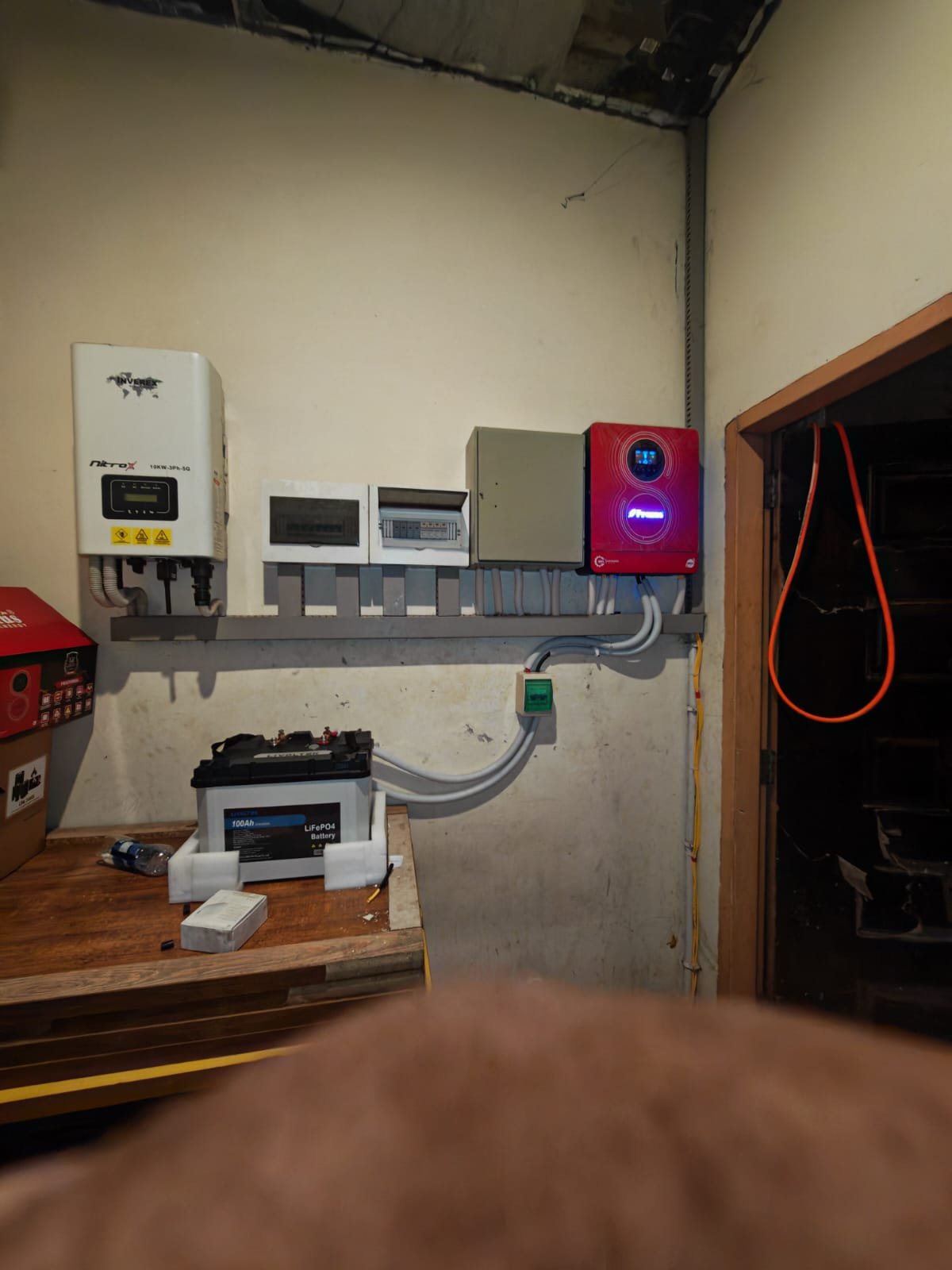
Hybrid Solar System
A hybrid solar system combines:
- Solar panels
- A solar inverter
- Battery storage
- Grid electricity
Hybrid systems are popular among customers who want both bill reduction and backup power.
During the day, solar energy can power appliances and charge the battery. During a power outage, the battery can provide electricity to selected loads.
The size of the solar panels and battery should be calculated separately.
For example, you may require:
- A 6kW solar system
- A 10kWh lithium battery
The correct battery size depends on how long you want backup power and which appliances you want to operate during an outage.
Off-Grid Solar System
An off-grid system is designed to operate without depending on the electricity grid.
This type of system usually requires:
- Sufficient solar panel capacity
- Battery storage
- Proper inverter capacity
- Backup planning
Off-grid systems require careful design because the system must provide electricity even when solar production is low.
They may be suitable for remote areas, agricultural applications, or locations where grid electricity is unavailable or unreliable.
6.How Much Rooftop Space Do I Need?
The available rooftop space is another important factor.
The number of solar panels required depends on:
- Panel wattage
- Panel dimensions
- Installation layout
- Rooftop structure
- Shading
- Maintenance access
For example, a system using high-wattage panels may require fewer panels compared with a system using lower-wattage panels.
However, the total area required also depends on the specific panel model.
A professional site survey can determine:
- Available roof area
- Shadow patterns
- Roof direction
- Structural considerations
- Best panel placement
A rooftop that appears large may have limited usable space because of water tanks, walls, shade, and other structures.
7.Does Lahore’s Weather Affect Solar System Size?
Yes.
Lahore experiences different weather conditions throughout the year, including:
- Hot summers
- Dust
- Smog
- Monsoon rainfall
- Winter fog
Solar panels still generate electricity on cloudy days, although production may be lower than on bright sunny days.
Dust and pollution can also affect solar panel performance. Regular cleaning and maintenance can help maintain system efficiency.
During the summer, air-conditioning demand can increase significantly. This means your electricity consumption may be much higher than during winter.
Therefore, it is important to review your electricity consumption across multiple months instead of relying on only one electricity bill
8.Why You Should Not Choose a Solar System Based Only on Price
One of the biggest mistakes customers make is choosing a solar system solely based on the lowest price.
A solar system is a long-term investment.
The quality of the following components matters:
- Solar panels
- Inverter
- Mounting structure
- DC and AC protection
- Cables
- Batteries
- Installation workmanship
A cheaper system may have lower-quality components or poor installation practices.
A professional solar company should explain:
- Expected system generation
- Equipment specifications
- Warranty information
- Installation process
- Maintenance requirements
- Safety features
The cheapest solar system is not always the most economical option in the long term.
9.How EcoGreen Solar Can Help You Choose the Right System Size
Choosing the correct solar system size requires more than simply looking at your electricity bill.
EcoGreen Solar helps customers evaluate their energy needs and choose suitable solar solutions for homes and businesses in Lahore.
The process may include:
Energy Consumption Analysis
Your electricity bills are reviewed to understand your monthly and seasonal consumption.
Load Assessment
Your appliances and electrical equipment are evaluated to understand your current load.
CONCLUSION:
1. What size solar system is best for a 5-marla house in Lahore?
A 5-marla house may require approximately 3kW to 8kW depending on the number of appliances, air conditioners, and electricity consumption. A professional load assessment is recommended.
2. How many solar panels do I need for a 5kW solar system?
The number of panels depends on the wattage of the selected panels. Higher-wattage panels require fewer panels to achieve the same system capacity.
3. Is a 5kW solar system enough for a house?
A 5kW system may be suitable for a medium-sized home with moderate electricity consumption. The exact suitability depends on your appliances and usage pattern.
4. How many units can a solar system generate in Lahore?
Solar generation varies depending on system size, weather, shading, panel orientation, equipment efficiency, and maintenance. A professional solar design can provide a more accurate generation estimate.
5. Do I need batteries with solar panels?
Not always. On-grid systems may operate without batteries, while hybrid and off-grid systems typically use batteries for backup and energy storage.
📍 Office: MM Tower, Plaza 54, KB Commercial Road, Lahore
📞 Phone: +92 319 9903998
📧 Email: Info@ecogreensolars.com
🌐 Website: www.ecogreensolars.com
#SolarSystemLahore #SolarEnergyPakistan #SolarPanelsLahore #SolarInstallationLahore #SolarPowerPakistan #RenewableEnergyPakistan #SolarEnergy #SolarSystem #SolarPanels #HybridSolarSystem #OnGridSolarSystem #SolarForHome #SolarForBusiness #CleanEnergy #GreenEnergy #EnergySavings #ElectricityBillSavings #SolarSolutions #EcoGreen Solar #LahoreSolar #SolarCompanyPakistan #SustainableEnergy #PakistanSolar #SolarInvestment #SolarPowerSolutions
Need help with your solar or electrical work?
EcoGreen Solar installs solar systems and provides electricians, wiring and CCTV across Lahore and Punjab. Get a free survey and a written quote.
Call / WhatsApp 0319 9903998 Request a free quote
Related: All our services in Lahore · Solar installation services · Cities we serve