
Solar for businesses can provide an effective way to manage rising electricity expenses while supporting daily operations.Every business wants to increase profitability, but reducing operating costs is often just as important as increasing sales. From salaries and rent to transportation, equipment, maintenance, utilities, and electricity, businesses have to manage a wide range of recurring expenses.
Among these expenses, electricity costs can represent a significant portion of monthly operating expenses, especially for businesses that use air conditioning, refrigeration, machinery, lighting, computers, pumps, production equipment, or other electrical systems.
This is one of the main reasons businesses are turning toward solar energy.As energy costs continue to increase, solar for businesses is becoming an attractive long-term energy solution.
Solar energy for businesses allows companies to generate electricity from sunlight and use that electricity to power their daily operations. Instead of purchasing all electricity from the grid, businesses can generate a portion of their own power.
This can help reduce electricity bills, improve energy independence, provide greater control over energy expenses, and support long-term financial planning.
Whether it is a small office, retail shop, restaurant, warehouse, school, hospital, factory, or large industrial facility, solar can be customized according to the business’s energy requirements.The right solar for businesses system can be customized according to electricity consumption, operating hours, and available installation space.
What Are Business Operating Costs?
Business operating costs are the expenses required to keep a company running on a day-to-day basis.
Common operating expenses include:
- Electricity
- Water
- Rent
- Salaries
- Maintenance
- Internet and communication
- Transportation
- Equipment
- Office supplies
- Security
- Insurance
- Marketing
- Cleaning
- Production costs
While some expenses are difficult to reduce without affecting operations, energy costs can often be managed through better efficiency and renewable energy.
Solar provides businesses with an opportunity to turn part of their electricity expense into a long-term energy investment.Solar for businesses can help turn a portion of recurring electricity expenses into a long-term energy investment.
How Solar Reduces Business Operating Costs
1. Solar Reduces Electricity Bills
The most direct way solar reduces operating costs is by reducing the amount of electricity a business purchases from the grid.
Solar panels generate electricity during daylight hours. That electricity can be used to operate business equipment and appliances.
For example, solar electricity can power:
- Air conditioners
- Computers
- Lighting
- Refrigerators
- Water pumps
- Machinery
- Fans
- Office equipment
- Production equipment
- Security systems
The more electricity a business generates and uses internally, the less electricity it may need to purchase from the grid.
For businesses with high daytime energy consumption, this can make solar particularly attractive.For companies with high daytime electricity consumption, solar for businesses can significantly reduce reliance on grid electricity.
2.Solar Helps Control Long-Term Energy Expenses
Electricity prices can change over time.
Businesses that rely entirely on grid electricity may have limited control over how much they spend on energy in the future.
Solar provides a different approach.
Instead of purchasing all electricity from an external supplier, a business can generate a portion of its electricity independently.
This can make long-term energy planning easier.
A business can estimate its solar investment, expected energy production, and projected savings to create a long-term financial model.
Although electricity prices and regulations can change, generating electricity on-site can reduce exposure to some future grid electricity cost increases.
3. Solar Converts Rooftop Space Into an Energy Asset
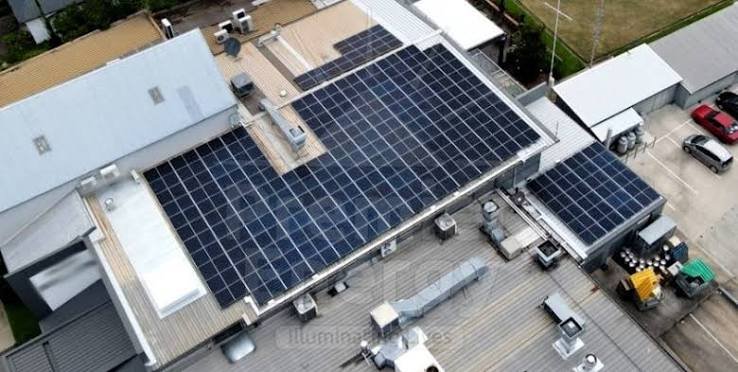
Many businesses have large unused rooftops.
Factories, warehouses, offices, schools, shopping centers, restaurants, and commercial buildings often have significant roof areas.
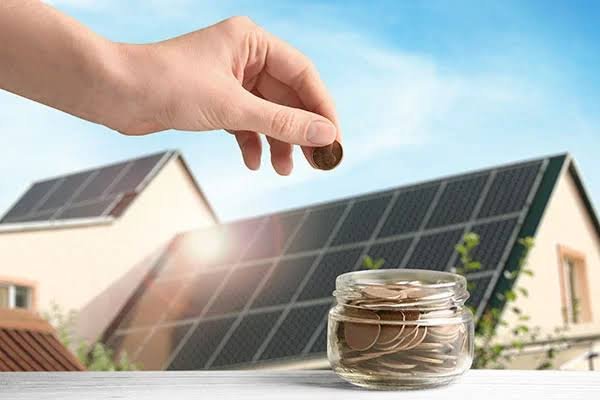
Solar panels can turn this unused space into an electricity-generating asset.
Instead of the rooftop simply being part of the building, it can contribute to the business’s energy requirements.
Before installation, the roof should be evaluated for:
- Structural condition
- Available space
- Shading
- Orientation
- Accessibility
- Panel layout
- Maintenance access
A professional site survey helps determine how much solar capacity can realistically be installed.
4. Solar Reduces Dependence on Grid Electricity
Businesses that rely completely on grid electricity are exposed to changes in tariffs, availability, and power interruptions.
Solar can reduce this dependence by allowing businesses to generate their own electricity.
The energy model can become:
Solar + Grid + Battery Backup
rather than:
Grid Only
The exact configuration depends on the business’s requirements.
An on-grid system may focus primarily on reducing electricity bills, while a hybrid system can add battery storage for backup and energy management.A properly designed solar for businesses system can combine solar generation, grid electricity, and battery storage according to business requirements.
5. Battery Storage Can Reduce Backup-Related Costs
Power interruptions can cause financial losses for businesses.
An outage can interrupt:
- Production
- Refrigeration
- Computer systems
- POS systems
- Internet connectivity
- Lighting
- Security systems
- Customer service
- Manufacturing processes
Some businesses use generators to provide backup power.
Generators can involve expenses such as:
- Fuel
- Maintenance
- Oil changes
- Repairs
- Noise management
- Generator servicing
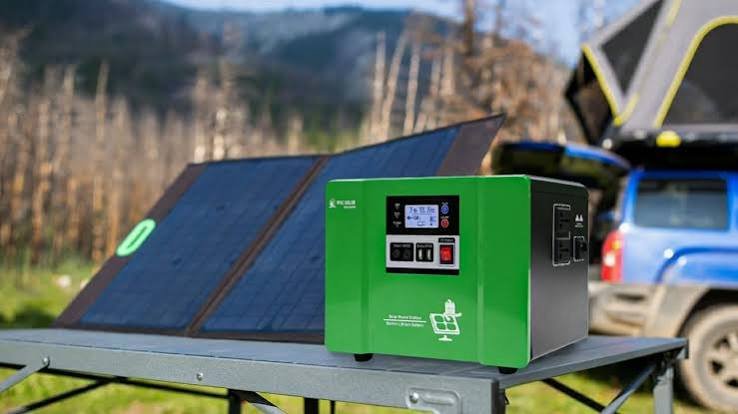
A hybrid solar system with battery storage can provide an alternative backup solution for selected loads.
While batteries require an initial investment and have their own lifecycle costs, they can reduce reliance on conventional backup generation for suitable applications.For businesses that require backup power, solar for businesses can be combined with batteries to support selected essential loads.
6. Solar Can Reduce Generator Fuel Consumption
Businesses that regularly use diesel generators during power interruptions can spend significant amounts on fuel.
A solar-plus-battery system can potentially reduce the amount of time a generator needs to operate, depending on the system design and backup requirements.
For example, a hybrid system may use:
Solar → Battery → Critical Loads
during suitable conditions.
The generator can remain available as an additional backup source where required.
Reducing generator runtime can potentially lower:
- Fuel consumption
- Generator maintenance
- Oil costs
- Wear and tear
- Operating noise
This can create additional financial value beyond the solar electricity savings.Solar for businesses can potentially reduce generator operating time and associated fuel and maintenance expenses.
7. Solar Supports Energy Efficiency
Installing solar often encourages businesses to examine their energy consumption more closely.
Once a company starts monitoring electricity generation and consumption, it may discover opportunities to reduce unnecessary energy use.
For example, a business may identify:
- Inefficient lighting
- Old air conditioners
- Poor insulation
- Overloaded equipment
- Poor maintenance
- Unnecessary standby consumption
- Inefficient motors
Businesses can combine solar with energy-efficiency improvements.
Useful measures include:
- Installing LED lighting
- Using energy-efficient air conditioners
- Maintaining HVAC systems
- Improving insulation
- Upgrading inefficient equipment
- Using smart energy monitoring
- Turning off unnecessary equipment
Reducing consumption first can make the solar system more effective because the business can get more value from every unit of solar electricity generated.Combining solar for businesses with energy-efficiency measures can help companies get greater value from every unit of electricity generated.
8. Solar Can Lower Energy Costs for Offices
Modern offices depend heavily on electricity.
Typical office loads include:
- Computers
- Servers
- Internet equipment
- Printers
- Lighting
- Air conditioning
- Elevators
- Security cameras
- Office appliances
Large offices can have substantial electricity bills, particularly in hot weather when air conditioning operates for long hours.
Because many offices operate during daylight hours, solar electricity can directly support their daytime energy consumption.
A properly sized commercial solar system for offices can therefore help reduce electricity expenses while supporting daily business operations.Solar for businesses is particularly suitable for offices because many office activities take place during daylight hours.
9. Solar Can Reduce Costs for Retail Stores
Retail businesses use electricity for lighting, air conditioning, refrigeration, security, POS systems, and signage.
For stores operating throughout the day, solar generation can directly offset electricity consumption.
A smaller commercial solar system may be sufficient for a small shop, while large retail outlets may require significantly greater capacity.
The right system should be based on actual energy consumption rather than simply the size of the building.Small and large retailers can consider solar for businesses based on their electricity consumption and available installation space.
10. Solar Can Benefit Restaurants and Cafes
Restaurants and cafes often have high electricity consumption because they use multiple energy-intensive appliances.
These may include:
- Refrigerators
- Freezers
- Coffee machines
- Ovens
- Air conditioners
- Exhaust systems
- Lighting
- Water pumps
- Kitchen equipment
Solar can help reduce the electricity purchased from the grid.
A hybrid system can also provide backup for essential equipment such as refrigeration, lighting, POS systems, and selected kitchen loads.
This can help protect operations during power interruptions.Solar for businesses can help restaurants and cafes reduce grid electricity consumption while supporting important daily equipment.
11. Solar Can Reduce Industrial Energy Expenses
Industrial facilities often have some of the highest electricity requirements among businesses.
Factories may use:
- Motors
- Pumps
- Compressors
- Production machinery
- HVAC systems
- Industrial lighting
- Conveyors
- Processing equipment
Because energy is often a major production expense, even a partial reduction in grid electricity consumption can have a meaningful impact on operating costs.
A professionally engineered industrial solar system can be designed according to the factory’s load profile, production schedule, available roof space, and electricity consumption.
12. Solar Improves Predictability of Energy Costs
Business planning requires predictable expenses.
Electricity bills can fluctuate because of changes in consumption, tariffs, seasonal demand, and other charges.
Solar can make part of a company’s electricity generation more predictable.
Once the system is installed, the business can monitor:
- Daily solar generation
- Monthly generation
- Grid consumption
- Solar self-consumption
- Battery usage
- Energy savings
This data can help management make better energy decisions.
Frequently Asked Questions (FAQs)
1. How does solar reduce business operating costs?
Solar reduces operating costs primarily by generating electricity that a business can use instead of purchasing the same amount of electricity from the grid.
2. Can solar reduce a company’s electricity bill?
Yes. The amount of savings depends on system size, electricity consumption, solar generation, operating hours, electricity tariffs, and how much solar electricity is used directly by the business.
3. Is solar suitable for small businesses?
Yes. Solar systems can be designed for small shops, offices, cafes, and other businesses according to their electricity consumption and available space.
4. Can factories benefit from solar energy?
Yes. Factories often have high electricity consumption and can use commercial or industrial solar systems to offset electricity used by machinery, motors, pumps, lighting, HVAC systems, and other loads.
5. Does a business need batteries with solar?
Not necessarily. On-grid solar can be suitable when the main objective is reducing electricity costs. Batteries are useful when backup power and energy storage are important.
6. Can solar reduce generator expenses?
A hybrid solar and battery system can potentially reduce generator runtime during suitable conditions, which may reduce fuel consumption and generator maintenance requirements.
7. Can solar provide backup power for businesses?
A properly designed hybrid solar system with battery storage can provide backup power for selected business loads during grid outages.
8. How much solar does a business need?
The required capacity depends on electricity consumption, peak demand, daytime load, available installation space, operating hours, and backup requirements.
9. Can solar power office air conditioners?
Yes. Solar can support office air conditioning when the solar system and inverter are correctly sized according to the AC units’ power requirements.
10. Is commercial solar a good investment?
Commercial solar can be a valuable long-term investment for businesses with significant electricity consumption. The financial outcome depends on installation cost, electricity savings, system performance, financing, and other project-specific factors.
Overall, solar for businesses can help reduce electricity costs, improve energy independence, and support more predictable long-term operating expenses.
📍 Office: MM Tower, Plaza 54, KB Commercial Road, Lahore
📞 Phone: +92 319 9903998
📧 Email: Info@ecogreensolars.com
🌐 Website: www.ecogreensolars.com
#SolarForBusinesses #BusinessSolar #SolarEnergy #CommercialSolar #SolarPower #SolarPanels #SolarSolutions #CommercialSolarSystem #SolarInstallation #BusinessEnergy #EnergyEfficiency #SolarSavings #ElectricityBillSavings #SolarInvestment #SolarROI #HybridSolar #SolarBattery #RenewableEnergy #CleanEnergy #IndustrialSolar #SolarForFactories #SolarForOffices #SolarForRestaurants #SolarPakistan
Frequently asked questions
Is solar worth it for businesses in Pakistan?
Yes for most businesses with daytime loads such as offices, shops, factories, schools and hospitals, because solar generation matches working hours.
Need help with your solar or electrical work?
EcoGreen Solar installs solar systems and provides electricians, wiring and CCTV across Lahore and Punjab. Get a free survey and a written quote.
Call / WhatsApp 0319 9903998 Request a free quote
Related: Commercial & industrial wiring · Solar installation services · Cities we serve