
If you are wondering does solar work during monsoon season,
The answer is yes
Although solar electricity production can vary depending on rainfall, cloud cover, and available sunlight.
This does not mean that solar systems stop working or become ineffective during the rainy season. Solar panels are designed to generate electricity from available light, not simply from direct sunshine. Even on cloudy days, some sunlight can reach the photovoltaic cells.
Understanding does solar work during monsoon season is especially important for Lahore homeowners who want reliable solar energy throughout the year.
For homeowners, the most important thing is to understand that solar production changes with weather conditions. A sunny day can produce much more electricity than a heavily overcast day, but a few rainy days should not be used to judge the performance of a solar system over its.
1. Do Solar Panels Work During Monsoon Season?
Yes, solar panels can continue generating electricity during the monsoon season.
Solar panels use photovoltaic cells to convert available light into electrical energy. They do not require perfectly clear skies to operate.
However, the amount of electricity produced depends on the intensity of available sunlight.
So, does solar work during monsoon season? Yes, solar panels can continue generating electricity as long as sufficient daylight reaches their photovoltaic cells.
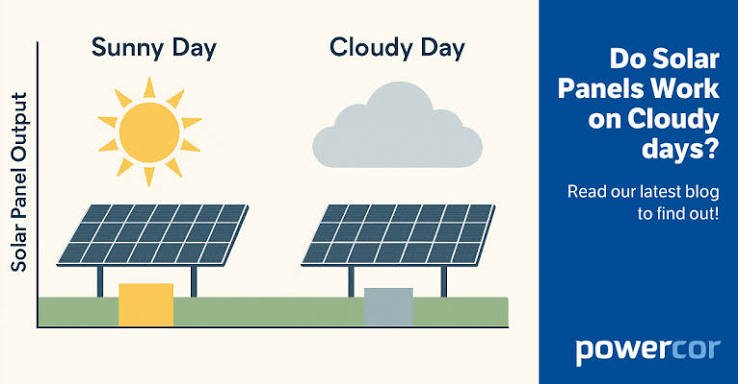
On a clear day:
Strong sunlight → Higher solar generation
On a cloudy day:
Less sunlight → Lower solar generation
During heavy rain and dense cloud cover:
Very limited sunlight → Significantly lower generation
Therefore, monsoon weather can reduce solar output, but it does not automatically stop a solar system from working.
2. Why Does Solar Production Decrease During Rainy Weather?
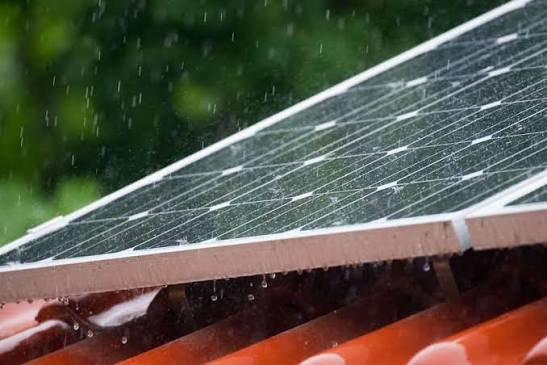
The main reason solar production decreases during the monsoon is reduced sunlight.
Heavy rain is often accompanied by thick clouds. These clouds scatter, reflect, and absorb part of the sunlight before it reaches the solar panels.
The panels therefore receive less solar energy.
Several factors can influence production during monsoon:
- Cloud thickness
- Rain intensity
- Duration of rainfall
- Available daylight
- Atmospheric conditions
- Panel orientation
- Roof shading
- Panel cleanliness
- Solar system size
This explains why does solar work during monsoon season can have a positive answer even when daily electricity production is lower during heavy rain.
This is why the electricity generated by your solar system can change from one day to another.
3. Do Solar Panels Work on Cloudy Days?
Yes.
When homeowners ask does solar work during monsoon season, cloudy-day performance is one of the most important factors to understand.
Solar panels can still produce electricity when the sky is cloudy because some sunlight continues to reach the panel surface.
However, cloudy weather generally results in lower electricity generation than bright sunshine.
For example, your system may generate strong output during a clear afternoon but produce considerably less electricity when thick clouds cover the sky.
This is normal solar behavior.
A lower output on a cloudy day does not necessarily mean there is a problem with your solar panels or inverter.
4. What Happens During Heavy Rain?
During heavy rainfall, solar production may fall significantly.
The rain itself is not necessarily the main reason. The bigger factor is the thick cloud cover that often accompanies heavy rain.
When sunlight becomes very weak, the photovoltaic cells receive less energy and generate less electricity.
However, weather conditions can change quickly during monsoon season.
For example:
Morning: Overcast skies
Afternoon: Heavy rain
Later afternoon: Clouds begin clearing
Evening: Solar production gradually decreases as daylight fades
This changing output is a normal part of understanding how and why solar works during monsoon season.
This means solar generation can fluctuate considerably during a single day.
5. Can Solar Panels Generate Electricity After Rain?
Absolutely.
If you are asking does solar work during monsoon season after rainfall, solar generation can increase again when clouds clear and stronger sunlight reaches the panels.
Once rainfall stops and sunlight returns, solar production can increase again.
If clouds clear in the afternoon, the panels can immediately begin receiving stronger sunlight and generating more electricity.
This is why homeowners should not judge their solar system based on a single rainy day.
Instead, solar performance should be evaluated over:
- Several days
- Weeks
- Months
- Different seasons
Long-term monitoring gives a much better understanding of how the system is performing.
6. Can Rain Clean Solar Panels?
Rain can actually provide one useful benefit.
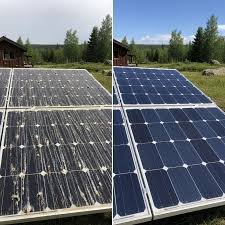
It can wash away some loose dust and dirt from the surface of solar panels.
This can be helpful because dust and dirt can reduce the amount of sunlight reaching the photovoltaic cells.
However, rain does not necessarily clean panels completely.
One reason homeowners continue asking does solar work during monsoon season is concern that rain will prevent their panels from generating electricity.
After rainfall, panels can sometimes have:
- Water spots
- Mud deposits
- Dust residue
- Bird droppings
- Other contaminants
Therefore, homeowners should still inspect their panels regularly.
Rain can help clean solar panels, but it should not completely replace regular maintenance.
7. Does Rain Damage Solar Panels?
Quality solar panels are designed for outdoor environments and normal exposure to rain.
A professionally installed solar system should include appropriate mounting structures, weather-resistant components, electrical protection, and suitable wiring.
The quality of installation is therefore extremely important.
Knowing does solar work during monsoon season is only one part of choosing solar; proper installation is equally important for reliable performance during changing weather.
Potential problems can occur when there are:
- Poor-quality connectors
- Damaged cables
- Improper waterproofing
- Incorrect mounting
- Poor electrical protection
- Improper installation practices
This is why homeowners should select an experienced solar company in Lahore rather than choosing a provider based only on the lowest price.
A professional installation can help ensure that the system is properly prepared for outdoor weather conditions.
8. Does Humidity Affect Solar Panels?
Monsoon season usually brings higher humidity.
Humidity itself does not mean that solar panels stop working. However, humid atmospheric conditions combined with clouds, rain, and haze can reduce the amount of solar radiation reaching the panels.
The most important factor remains:
How much usable sunlight is reaching the panels?
If sunlight is strong, solar production can be strong even when temperatures are relatively comfortable.
If sunlight is heavily blocked by clouds, production will decrease.
When asking does solar work during monsoon season, homeowners should focus primarily on available sunlight rather than temperature or humidity alone.
9. What About Storms and Strong Winds?
Monsoon weather can sometimes include strong winds and storms.
This makes the quality of the mounting structure especially important.
Solar panels should be securely mounted to the roof using appropriate structures and installation techniques.
Before installing solar, homeowners should ask their installer about:
- Mounting structure quality
- Roof condition
- Wind resistance
- Panel positioning
- Structural safety
- Waterproofing
- Cable management
Professional installation can reduce the risk of weather-related problems.
10. Can Batteries Help During Monsoon Season?
Yes.
Battery storage can be especially useful during periods when solar production is reduced.
A hybrid solar system can combine:
- Solar panels
- Inverter
- Battery storage
- Grid electricity
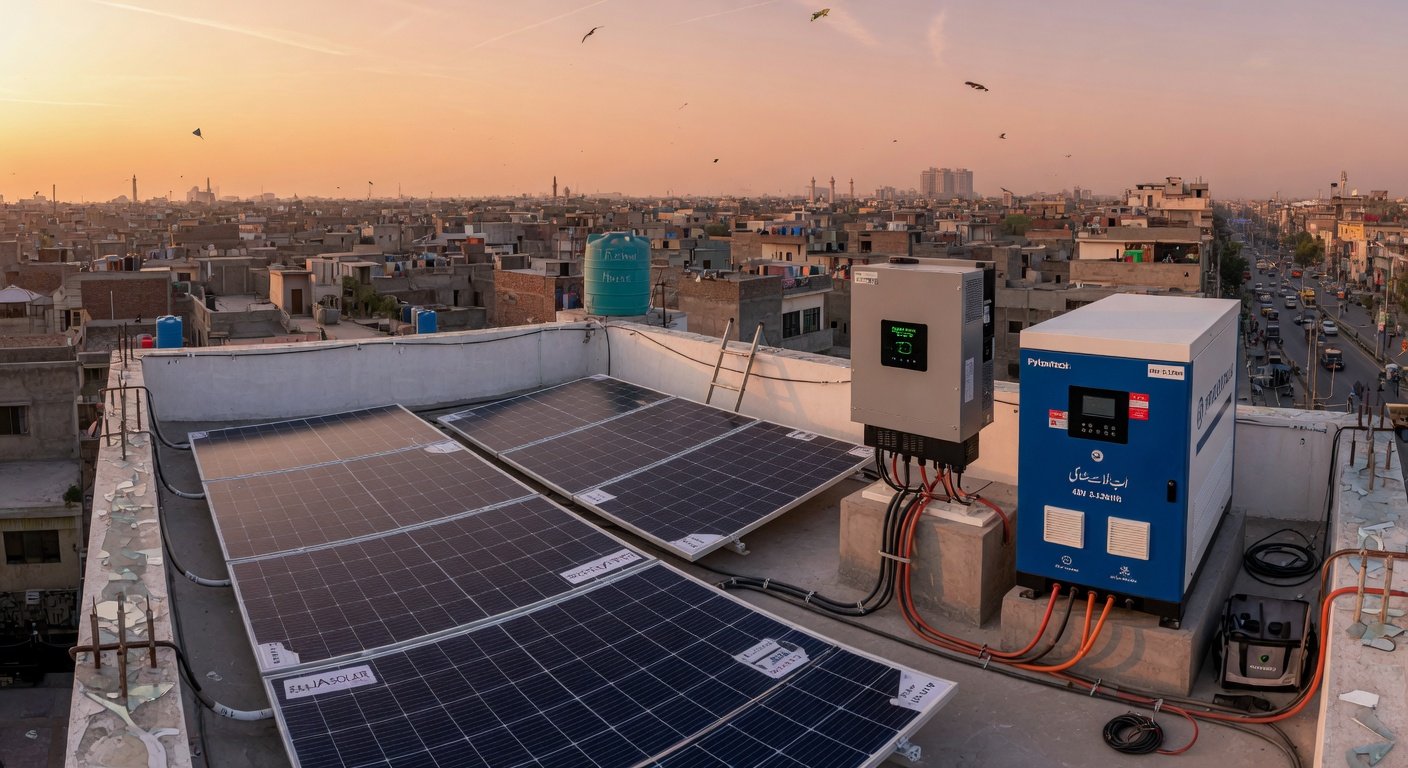
When solar production is strong, excess energy can be used to charge the battery, depending on the system configuration.
If you are asking does solar work during monsoon season because of concerns about low production, battery storage can provide additional flexibility during periods of reduced solar generation.
Later, when solar production is lower, stored energy can help power selected household loads.
For example:
Sunny period → Solar generates electricity → Excess energy charges battery
Then:
Cloudy/rainy period → Solar output decreases → Battery can support selected loads
This can provide homeowners with additional flexibility during the monsoon.
11. How Much Battery Backup Do You Need?
Battery requirements depend on what you want to power.
Some homeowners only want essential backup loads such as:
- Lights
- Fans
- Wi-Fi router
- Television
- Computer
- Refrigerator
The answer to does solar work during monsoon season may also depend on whether your solar system includes sufficient battery capacity for your backup requirements.
Others may want to power heavier appliances.
Air conditioners, water pumps, and other high-power appliances can require substantially more battery capacity.
Therefore, homeowners should determine:
- Which appliances need backup?
- How many hours of backup are required?
- What is the total load?
- What battery capacity fits the budget?
- What solar capacity is available?
A professional solar assessment can help determine an appropriate battery size.
12. Does Solar Work at Night During Monsoon?
Solar panels do not generate electricity at night because there is no sunlight.
However, a home can still receive electricity from:
- The electricity grid
- Battery storage
- A combination of solar, battery, and grid
A hybrid system can automatically manage these energy sources depending on its configuration.
For homeowners who want backup after sunset, battery storage can therefore be an important part of the solar system.
13. How Does Monsoon Affect Solar Inverters?
The inverter is one of the most important components of a solar system.
It converts and manages electricity generated by the solar panels and, depending on the system, manages batteries and grid electricity.
The inverter should be installed in an appropriate location according to the manufacturer’s requirements.
It should have adequate ventilation and protection from direct exposure to rain.
Homeowners should also monitor the inverter for:
- Error messages
- Unusual shutdowns
- Abnormal temperature
- Unexpected production drops
If something unusual occurs, it is better to contact a qualified solar technician rather than attempting electrical repairs yourself.
14. Why Solar Monitoring Is Important During Monsoon
Solar monitoring allows homeowners to understand how their system performs under changing weather conditions.
Depending on the inverter and monitoring platform, you may be able to track:
- Daily solar generation
- Monthly generation
- Current output
- Energy consumption
- Battery charging
- Battery discharge
- Grid electricity usage
- System alerts
During monsoon season, monitoring becomes particularly useful because daily production can change significantly.
A rainy day with low output may be completely normal.
However, if production remains unusually low during several clear days, the system may need to be inspected.
Frequently Asked Questions (FAQs)
1. Does solar work during the monsoon season?
Yes. Solar panels continue to generate electricity during the monsoon when daylight is available. However, production can decrease during cloudy and rainy weather.
2. Do solar panels work during heavy rain?
They can still generate some electricity, but heavy rain and thick clouds can significantly reduce solar output.
3. Do solar panels work on cloudy days?
Yes. Solar panels can generate electricity from available daylight, although output is generally lower than on clear sunny days.
4. Can rain clean solar panels?
Yes. Rain can remove some loose dust and dirt, but it may not completely clean the panels. Regular inspection and cleaning may still be required.
5. Can rain damage solar panels?
Quality solar panels are designed for outdoor use. Proper installation, waterproofing, mounting, and electrical protection are important for long-term performance.
6. Can batteries help during monsoon?
Yes. Batteries can store energy during periods of stronger solar production and provide stored electricity when solar generation is lower, depending on the system configuration.
7. Should I install solar before monsoon?
You do not have to wait until after monsoon. Installing earlier allows you to start generating solar electricity sooner.
8. Why is my solar production low during rainy weather?
Clouds and rain reduce the amount of sunlight reaching your panels. Lower production during heavily overcast weather is generally normal.
9. How can I maintain solar panels during monsoon?
Inspect panels, check mounting structures, monitor production, keep drainage areas clear, and have electrical components inspected by qualified professionals when necessary.
10. Is solar worth it in Lahore despite monsoon weather?
Yes, for many homeowners. Solar systems are long-term investments, and temporary reductions in production during rainy weather do not eliminate their overall annual energy-generation potential.
📞 Phone: +92 319 9903998
📧 Email: Info@ecogreensolars.com
🌐 Website: www.ecogreensolars.com
#SolarLahore #SolarEnergyLahore #SolarPanelsLahore #SolarInstallationLahore #SolarSystemLahore #SolarMonsoon #MonsoonSolar #SolarInRain #SolarEnergy #SolarPower #SolarPakistan #PakistanSolar #HomeSolar #ResidentialSolar #HybridSolar #SolarBattery #SolarInverter #RenewableEnergy #CleanEnergy #GreenEnergy #EnergyEfficiency
Frequently asked questions
Do solar panels work in the rain?
Yes, at reduced output. Panels still generate on cloudy and rainy days, and rain helps clean dust off them.
How do I protect my solar system in monsoon?
Check earthing and lightning protection, seal junction boxes, keep inverters dry and ventilated, and make sure the mounting structure is tight.
Need help with your solar or electrical work?
EcoGreen Solar installs solar systems and provides electricians, wiring and CCTV across Lahore and Punjab. Get a free survey and a written quote.
Call / WhatsApp 0319 9903998 Request a free quote
Related: Solar installation services · Cities we serve